Donald Goines Biography: The Raw Legacy of the Godfather of Street Lit
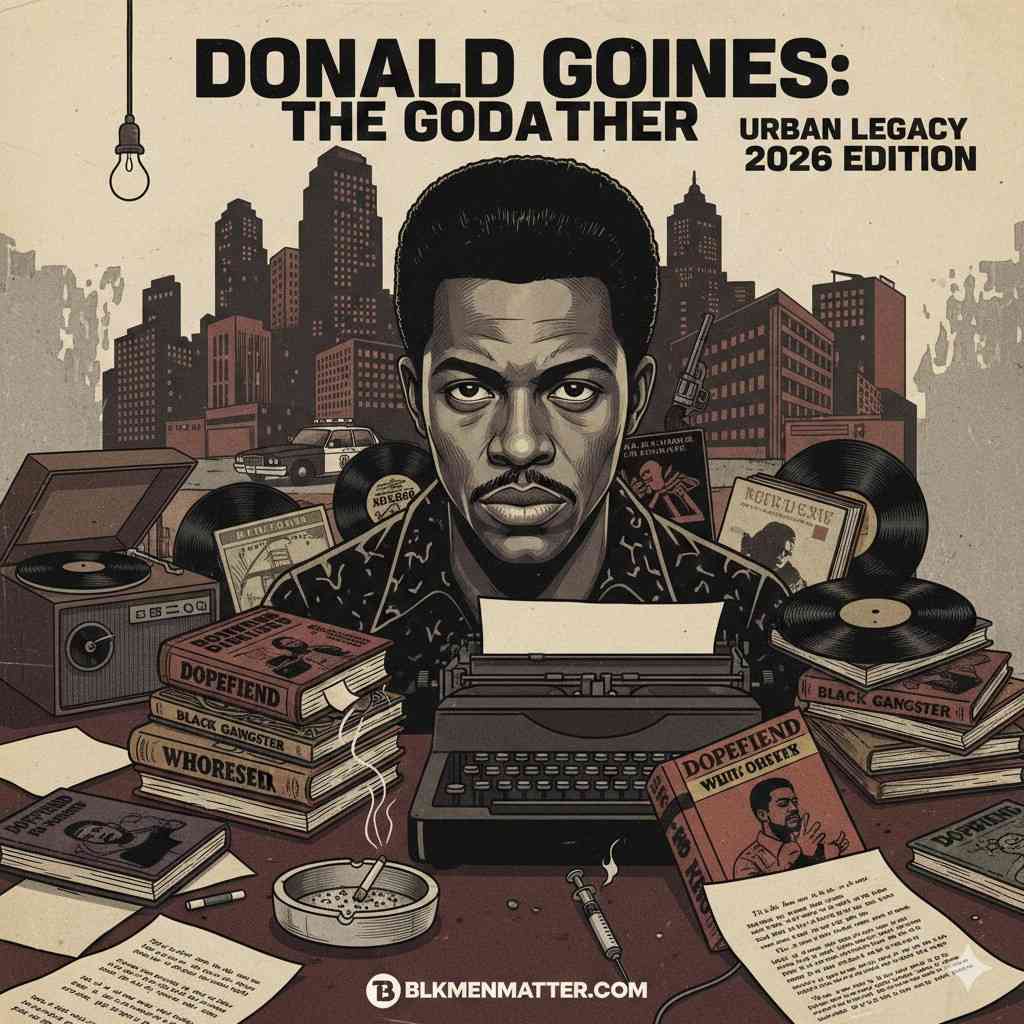
In the unforgiving streets of Detroit, where the hustle never sleeps, one man turned his pain into a literary revolution. Donald Goines (1936–1974) wasn’t just a writer; he was the unfiltered voice of the block. As we reflect in 2026, his story remains a powerful cornerstone of Black history and urban culture. Known as the Godfather of Street Lit, Goines’ work continues to shape hip-hop and the consciousness of a generation.
Early Life: From Middle-Class Roots to the Streets
While many imagine a “street lit” pioneer coming from nothing, the Donald Goines biography begins with stability. Born in Detroit, Michigan, Goines grew up in a hardworking, middle-class household. His parents ran successful dry-cleaning businesses, and he attended Catholic schools.
However, the allure of the streets took hold early. At just 15, Goines forged documents to enlist in the U.S. Air Force. After serving in the Korean War, he returned to Detroit with a heroin addiction that would haunt him for the rest of his life. To fund his habit, he dove into the underworld of bootlegging, pimping, and robbery. These experiences, though tragic, provided the raw material for his future masterpieces.
The Turning Point: Writing Behind Bars
Goines’ literary journey truly began during his seven different prison stints. It was behind bars that he discovered the work of Iceberg Slim. Seeing his own reality reflected in Slim’s pages, Goines realized he had a story to tell.
Upon his final release around 1970, he began a prolific writing spree that remains legendary. Under Holloway House publishing, he produced 16 novels in just three years. Using both his own name and the pseudonym Al C. Clark, he chronicled the “Ghetto Realism” that mainstream literature ignored.
Essential Donald Goines Books:
- Dopefiend (1971): A brutal, unflinching look at heroin addiction.
- Whoreson (1972): A semi-autobiographical tale of a pimp’s rise.
- Black Girl Lost (1973): A heartbreaking look at survival in the inner city.
- Never Die Alone (1974): Later adapted into a cult classic film starring DMX.
- The Kenyatta Series: Revolutionary vigilante tales focused on Black liberation and justice.
Support the Legacy: Celebrate the author who defined a genre with our exclusiveDonald Goines Tribute T-Shirt.
A Tragic End: The Unsolved Mystery
On October 21, 1974, the world lost a giant. At age 37, Donald Goines and his common-law wife, Shirley Sailor, were found murdered in their Highland Park apartment. While their children were unharmed, the shooters were never caught. Theories persist today, ranging from drug debts to retribution for his realistic portrayals of street criminals. Goines died as he lived—deeply entangled in the world he so brilliantly documented.
The Legacy: Influence on Hip-Hop and Beyond
The impact of Donald Goines in 2026 cannot be overstated. He didn’t just write books; he provided a blueprint for storytelling that influenced icons like Tupac, Nas, and Jay-Z. His work turned the struggle of the marginalized into a respected form of literature.
For the modern Black man, Goines serves as a “cautionary legend.” His life reminds us that while the streets can provide stories, they often demand a heavy price. At Black Men Matter, we advocate for accountability over glorification and building a legacy that lasts without the cycle of destruction.
Recent works like Eddie B. Allen Jr.’s 2025 biography Low Road: The Life and Legacy of Donald Goines (with a foreword by DMX) keep his story alive, highlighting his impact 50+ years after his death. For a deeper visual dive into the locations and atmosphere that inspired his grit, check out this tribute to his Detroit roots here.
Join the Conversation
Donald Goines’ work is a mirror of a time and place that still resonates. Whether you are discovering his biography for the first time or are a lifelong fan, his “unbreakable truth” remains essential reading.
Which Donald Goines book hit you the hardest? Drop a comment below and let’s discuss the impact of his work on today’s culture.