In the shadows of America’s prison-industrial complex—a system that has warehoused Black bodies as political currency since the end of slavery—two unbreakable forces endure: the revolutionary fire of George Jackson and the disciplined observance of Black August. As we push forward into 2026, with ongoing repression, economic warfare, and the echoes of 2025’s resistance still ringing, Black Men Matter raises this history as a blueprint for kings who refuse to bow. Royalty is in the blood. The crown is just a warning. This legacy isn’t nostalgia—it’s a call to study, train, and fight for liberation.
Who Was George Jackson? The Dragon Philosopher Behind Bars
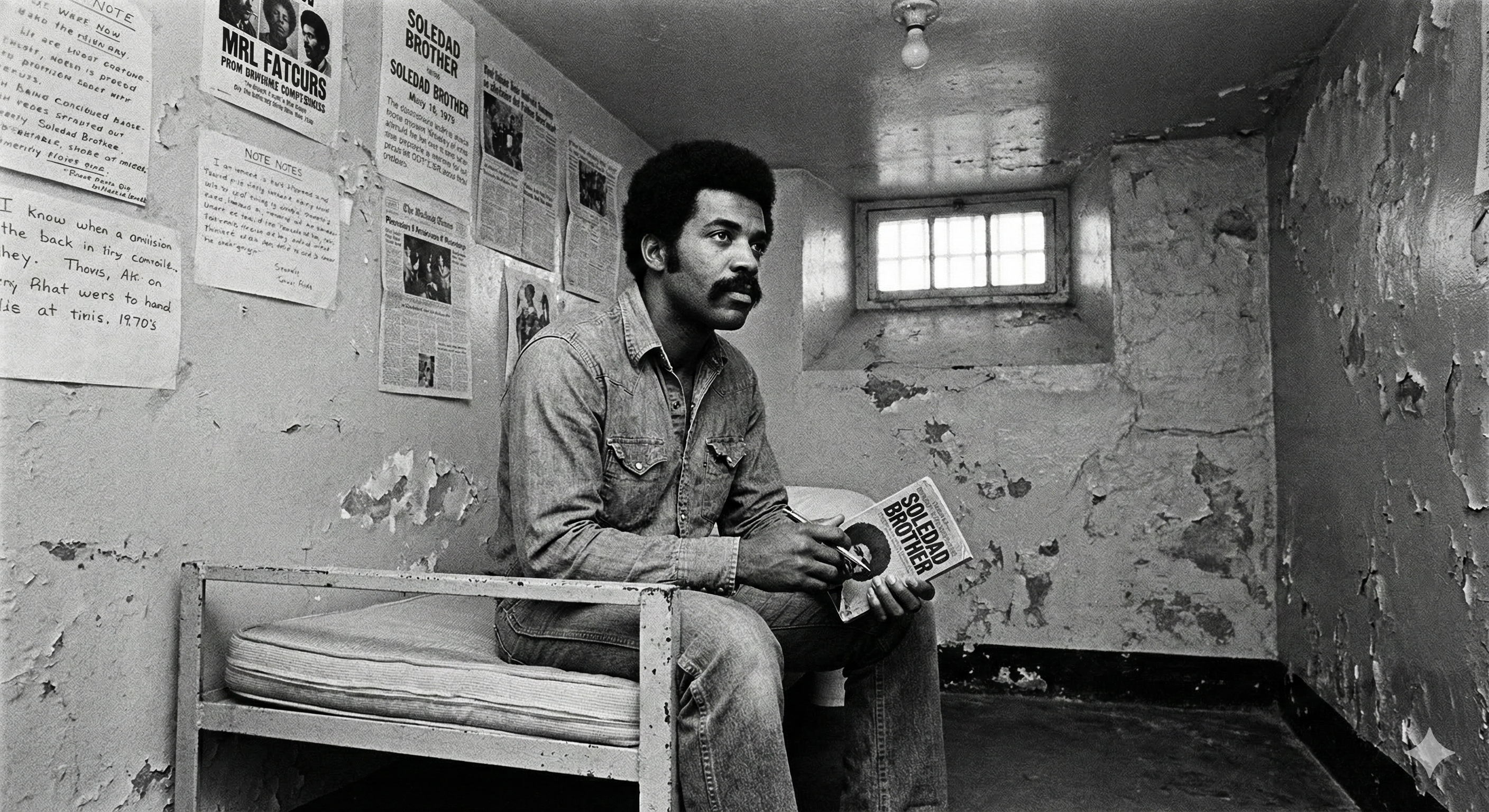
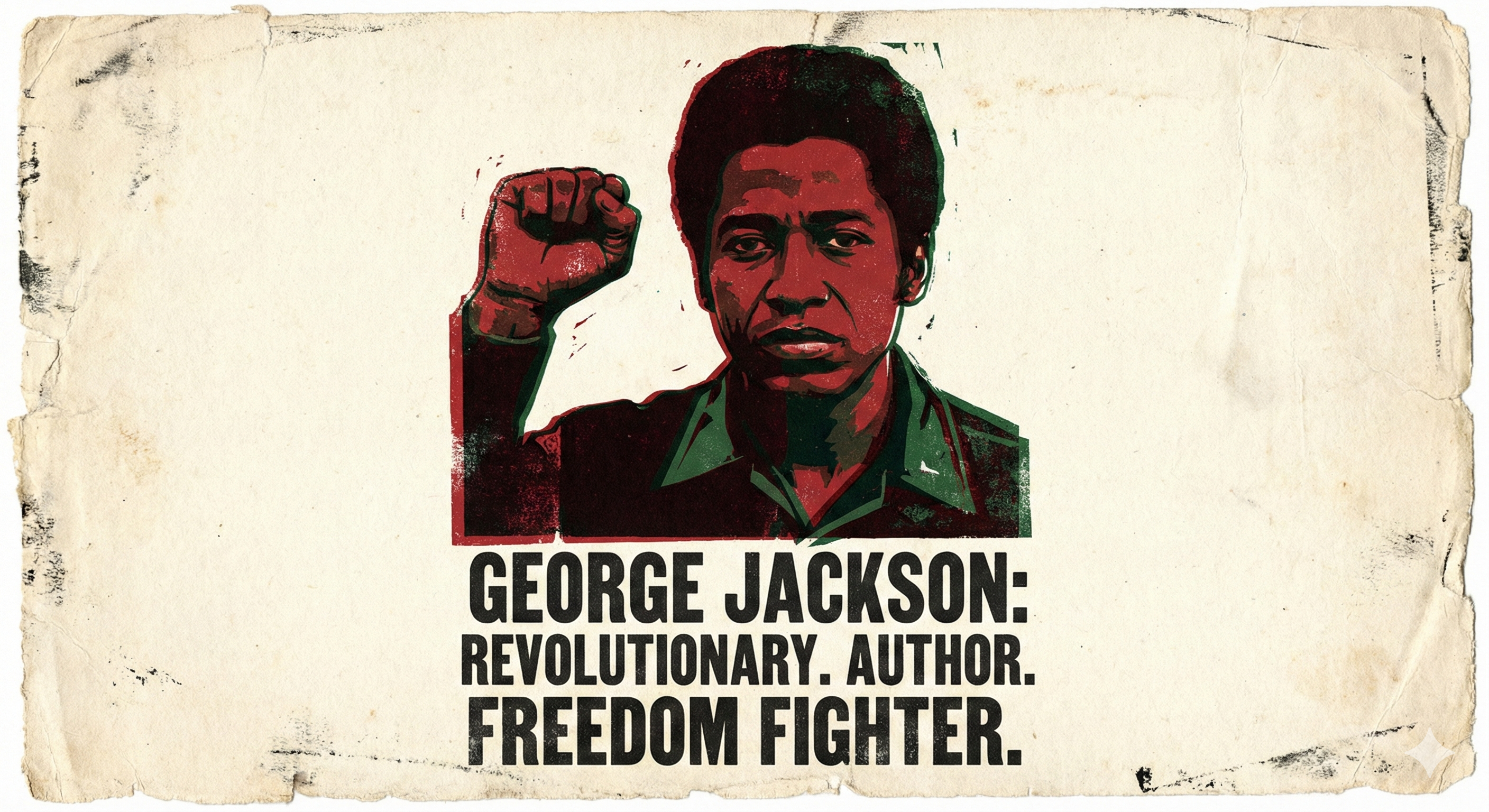
Born on September 23, 1941, in Chicago, George Lester Jackson was a brilliant mind ensnared by a system built to crush him. At just 18, he was convicted of armed robbery for stealing $71 from a gas station and sentenced to an indeterminate 1-year-to-life term in 1960. He spent over a decade in California prisons—primarily Soledad and San Quentin—with seven and a half years in solitary confinement. Instead of breaking, Jackson forged his rage into revolutionary theory. Drawing from Marx, Lenin, Mao, and Frantz Fanon, he became a Field Marshal of the Black Panther Party (while incarcerated), co-founder of the Black Guerrilla Family (BGF), and author of two powerful works:
- Soledad Brother: The Prison Letters of George Jackson (1970) – A global manifesto exposing prison racism, capitalism, and the need for armed resistance.
- Blood in My Eye (posthumously, 1972) – A blueprint for revolutionary struggle.
In 1970, Jackson and two others (Fleeta Drumgo and John Clutchette) faced murder charges for a guard’s death at Soledad Prison, retaliation for the “justifiable homicide” killing of three Black inmates. Known as the Soledad Brothers, their case ignited international outrage, with support from Angela Davis, Jean Genet, and more. Jackson’s younger brother, Jonathan, attempted a daring courthouse rescue in August 1970, leading to his death, a judge’s killing, and heightened repression. On August 21, 1971, while awaiting trial, George Jackson was shot and killed by San Quentin guards in what officials labeled an escape attempt. Thousands mourned him as a revolutionary martyr. His assassination sparked the Attica Prison uprising weeks later, solidifying his legacy as the dragon philosopher who turned captivity into a forge for liberation. Key George Jackson Quote:
“I’ve been patient, but where I’m concerned, patience has its limits. Take it too far, and it’s cowardice.” (From Soledad Brother) This truth resonates in 2026: Patience without action is surrender. Kings rise when they refuse to wait.
What Is Black August? Honoring Resistance and Building Power
Born in 1979 within California prisons—especially among the Black Guerrilla Family—Black August commemorates the sacrifices of Black liberation fighters who died or struggled behind bars. It links key historical moments:
- August 7: Jonathan Jackson’s courthouse rebellion (1970).
- August 21: George Jackson’s assassination (1971).
- August 21–September 9: Connections to Nat Turner’s rebellion (1831) and the Attica uprising (1971).
Black August demands discipline: study revolutionary texts, fast, train physically and mentally, fight oppression, and build solidarity. No parties, no indulgence—just focused self-transformation and collective resistance against the prison-industrial complex, police violence, and systemic racism. In recent years (2025–2026), Black August events—from prison strikes to community gatherings—have spotlighted medical genocide, political prisoners, and global solidarity (including connections to Palestine), urging action amid rising fascism.
2026 Reflection: Legacy for Black Kings – A Call to Action
George Jackson’s words burn brighter today: “The oppressor is very strong… but it will be physically impossible for the oppressor to go on. At some point, his legs will get tired, and when his legs get tired, then George Jackson and the People will tear his knee caps off.” Black August in 2026 isn’t about looking back—it’s about moving forward. With prisons still disproportionately filled with Black men, economic traps tightening, and resistance evolving, we honor this legacy by:
- Studying radical texts (Jackson, Fanon, Mao).
- Training body and mind daily.
- Fighting for abolition, accountability, and sovereignty.
- Teaching the next generation to break cycles.
Black Men Matter stands firm: True power comes from turning chains into weapons of liberation. Jackson didn’t die for silence or division. He died so we could live upright, unbreakable, and revolutionary. Wear the Legacy – Shop the Black August Liberation Tee
This isn’t just apparel—it’s wearable armor. Inspired by 1970s Black liberation protest art, the Black August Liberation Tee features a striking raised fist breaking chains and shattering prison bars in deep blacks, blood-red accents, and metallic gold. Vintage heavyweight cotton, premium fit. Study. Train. Fight. Remember the Legacy. Shop the Black August Liberation Tee Now –
Limited drop for kings who compete unapologetically. Watch the full biography video on TikTok for deeper inspiration: George Jackson & Black August TikTok.
What George Jackson quote or Black August practice hits hardest for you? Drop it in the comments. Then rise—study, fast, train, fight. Royalty is in the blood. The crown is just a warning. #GeorgeJackson #BlackAugust #RevolutionaryLegacy #BlackMenMatter #BlackKingsRise #StudyTrainFight #BloodlineLegends #BlackEmpowerment2026